
Rusty Pipe Syndrome
Some women who have recently given birth may notice a change in the color of their breast milk during breastfeeding. At times, the milk may appear light brown or orange. This color resembles the color of water flowing through a rusty pipe. Encountering this situation can be alarming for mothers; however, in most cases, the cause is a harmless and transient physiological condition known as Rusty Pipe Syndrome. The syndrome takes its name from the fact that the milk acquires a color similar to water passing through a rusted pipe.
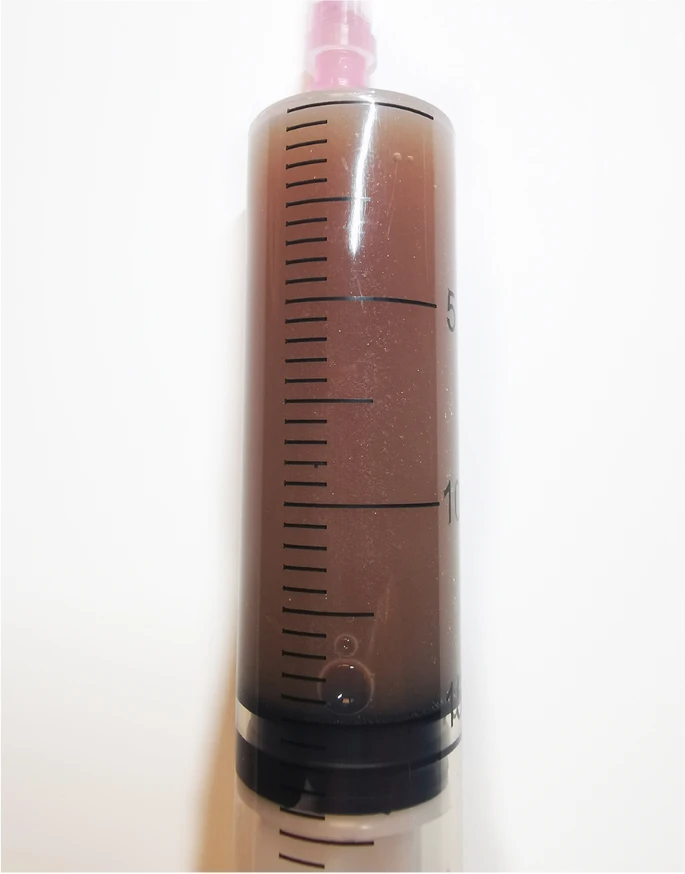
bmcpregnancychildbirth.biomedcentral.com
What is Rusty Pipe Syndrome?
This syndrome manifests as a painless discharge of blood-tinged milk from the breast during the late stages of pregnancy. It can also occur in the first days after childbirth. Despite its bloody appearance, this condition is not associated with cancer or infection and is considered a physiological phenomenon. According to studies, it is most commonly observed in first-time mothers. The condition typically resolves spontaneously within 3–7 days.
The main cause of this syndrome is the reaction of the blood vessels in the mammary glands to prepartum hormonal changes. As the milk ducts expand, small capillary vessels become fragile. This fragility allows a small amount of blood to mix with the milk.
It is important to distinguish Rusty Pipe Syndrome from other causes of bloody breast discharge. These causes include traumatic bleeding, infection-related bleeding (for example, during mastitis), or bleeding of tumorous origin. In this syndrome, the mother’s general condition is normal, and there is no breast pain, redness, or swelling. However, observing a change in the color of breast milk necessitates an initial medical examination.
In a study conducted in Brazil (Deboni et al., 2018), a 29-year-old primiparous woman was observed to have painless, dark brown, blood-tinged discharge. This occurred from both breasts immediately after childbirth. Clinical examination revealed no signs of inflammation, wounds, fissures, or tumors in the breasts. Ultrasonographic evaluation showed only small, benign cysts. No treatment was administered; the woman continued breastfeeding. The discharge gradually decreased within two days and completely resolved by the third day.
As this study demonstrates, if any discoloration of breast milk or bloody discharge is observed, an initial medical examination is essential. If all diagnostic findings are negative, the cause may be considered Rusty Pipe Syndrome.
Sometimes mothers may notice that the milk coming from their breasts has a reddish tint or appears pink in color. In such situations, they may feel uncertain about what to do. They may wonder whether to continue breastfeeding or to pause until the milk returns to its normal color.
The syndrome usually lasts 2–6 days and resolves spontaneously. If bloody milk continues for more than six days, if the amount of blood increases, or if pain, redness, or swelling develops during this period, it is necessary to consult a physician again. More detailed information on this topic is provided in our article “Reddish or Pink Breast Milk.”
Author: Hajar Piriyeva
Breastfeeding Consultant