
Infant Formula and Family Budget 2024
Breast milk is biologically optimal for the infant, ecologically ethical, and economically advantageous for the family. However, for various reasons, mothers sometimes have to resort to formula feeding. Contrary to popular belief, these reasons are not primarily due to the mother being “unable to produce milk,” but rather are often related to insufficient or absent support for breastfeeding.
The website anasudu.az launched an initiative to calculate the annual family expenses on infant formulas (artificial feeding products) in 2014. Ten years later, the anasudu.az team decided to conduct a meta-analysis and a new market study using 2024 data in Azerbaijan.
It was established that, based on the 2014 research data, an average family in Azerbaijan spent a minimum of 442.80 AZN and a maximum of 1,738.80 AZN annually solely on infant formula. These expenditures were calculated exclusively for infants fed entirely with formula.
In addition, the reported figures did not include the costs of financial and material resources intended for formula feeding. Expenses for commercially purchased drinking water used to prepare formula, water thermoses, pacifiers used to meet infants’ sucking needs, feeding bottles with teats, sterilizers for cleaning pacifiers and bottles, and cleaning agents, as well as household expenditures on electricity, heating system and water consumed during the preparation of infant formula, were not reflected in the calculations.
First, we attempted to examine the demographic parameters of infants born in Azerbaijan over the past decade. It was found that the number of live births in the country has been declining from year to year. This trend can be clearly observed below:
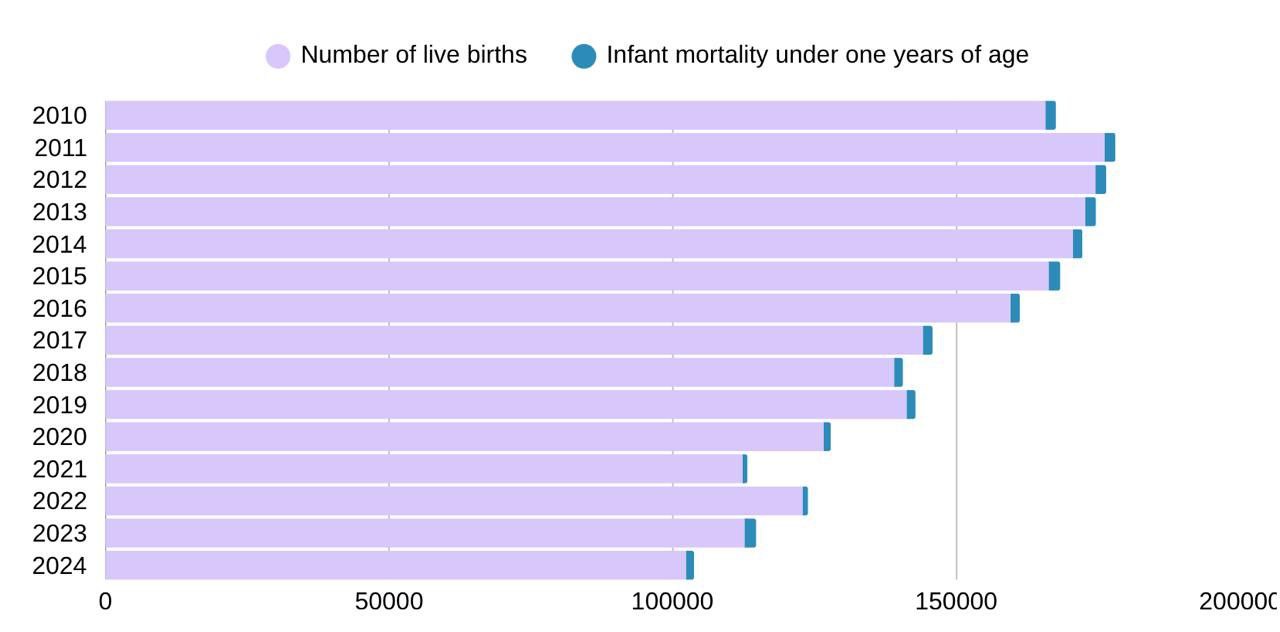
Despite the decline in the number of live births, a year-by-year decrease is observed in the proportion of infants who die before the age of one relative to the number of live births. This positive development may be associated with advances in medicine and improvements in the quality of neonatal care. Thus, infants who, on a global scale in previous years, would have died due to the low level of neonatal care now have higher chances of survival under contemporary conditions.
However, the health status of the majority of these children can be considered relatively vulnerable, as these infants require more support in breastfeeding compared to healthy infants. Typically, such infants exhibit compromised health, weakened sucking reflexes, and limitations in swallowing and respiratory functions; consequently, placing them to the breast and feeding them with breast milk is accompanied by difficulties.
The existence of this trend may, in fact, indicate a greater need for lactation consultants for these infants. For this reason, increasing the number of professionals specializing in breastfeeding counseling in local hospitals may play a significant role in raising breastfeeding rates.
According to official data provided by the State Statistical Committee of the Republic of Azerbaijan, 102,310 live births were recorded in Azerbaijan in 2024. Among these infants, 59,010 aged 0–3 months were fed with infant formula or received mixed feeding, while 43,300 were exclusively breastfed. Only 42.3% of infants from birth to three months of age were breastfed.
Between three and six months of age, 77,510 infants were fed with infant formula or received mixed feeding, whereas 24,800 infants were exclusively breastfed. Thus, only 31.1% of infants three to six months were breastfed.
Between six and twelve months of age, 71,310 children were fed with infant formula or received mixed feeding, while 31,000 continued to be breastfed. This indicates that only 30.3% of infants in this age group were breastfed. 5,400 infants continued to receive breast milk up to the age of two, which accounts for only 5.3% of children in this age group. It should be recalled that all major global and local authoritative health institutions and organizations strongly recommend breastfeeding infants up to the age of two. The inclusion of breast milk in the diet of young children until the age of two is considered an essential factor for health and development.
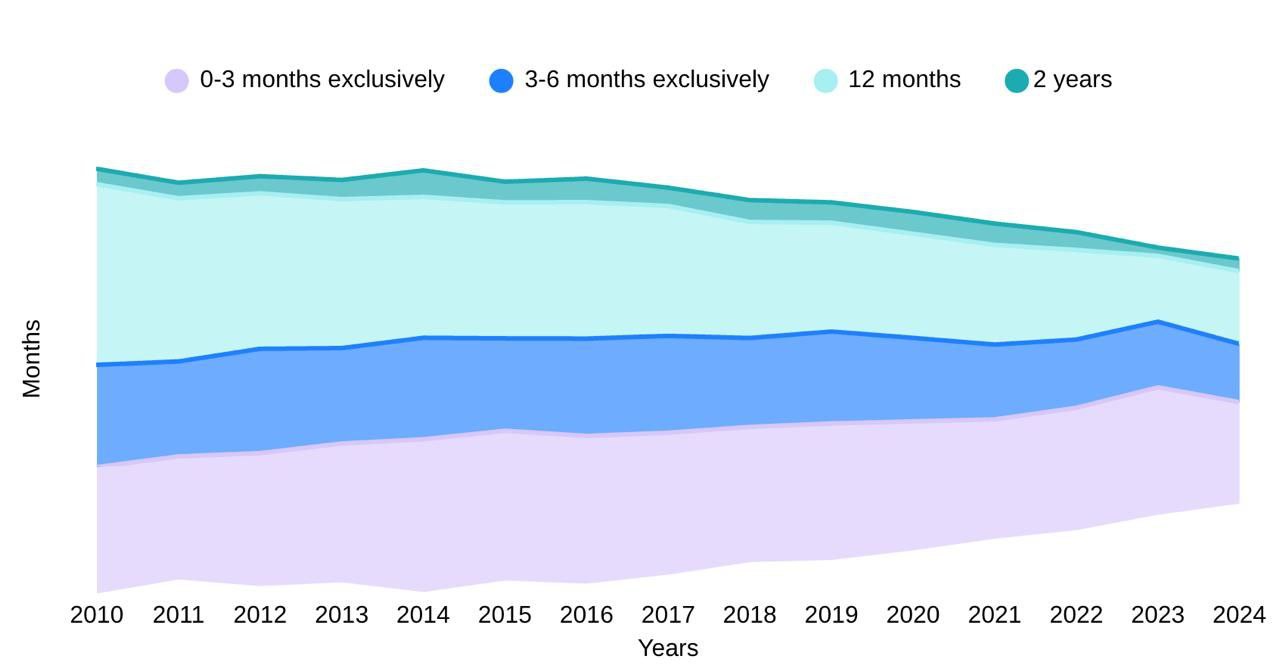
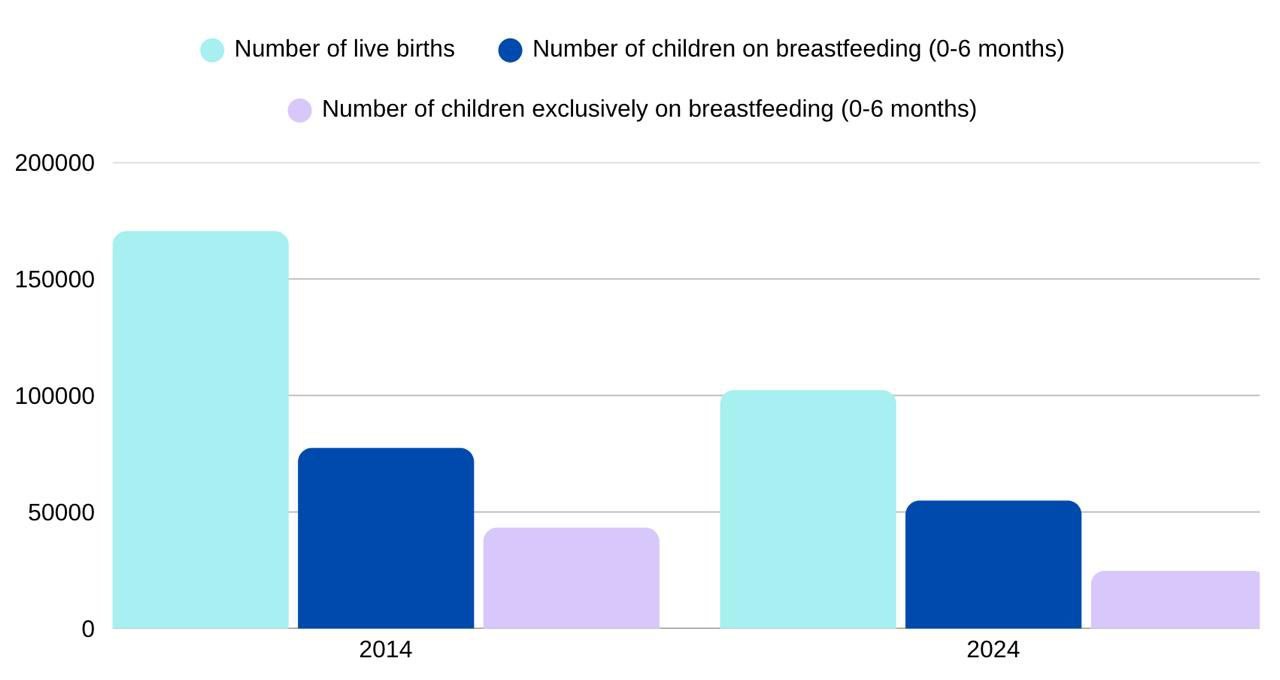
For comparison, it should be noted that in 2014 the percentage of infants breastfed up to the age of twelve months was 35.5%, whereas in 2024 this figure was 30.3%. In 2014, 6.69% of infants sustained their breastfeeding until the age of two, a figure that dropped to 5.3% in 2024.
Furthermore, the graph below clearly presents a comparison of these years across various age groups.
To examine changes occurring in the infant food market in other countries, we reviewed several official sources. Based on reports and market analyses by the United States Department of Agriculture Economic Research Service, the U.S. Bureau of Labor Statistics, and the Government Accountability Office, the price of infant food and milk formula in the United States increased by 126.35% between 1997 and 2025, with an average annual inflation rate of 2.96%.
According to data from the U.S. Bureau of Labor Statistics, the price difference for infant food and formula between 1997 and 2025 amounted to USD 25.27. According to the Journal of Perinatology, families in the United States spend approximately USD 760 to 2,280 annually on infant formula. However, other estimates suggest that, depending on brand, type, and quantity consumed, this figure may reach up to USD 3,600 for the first year. As a result, American families spend the equivalent of 1,292 to 6,120 AZN on infant formula at the current exchange rate.
In the United Kingdom, the cost of infant formula increased by an average of 24% between March 2021 and April 2023. The Competition and Markets Authority (CMA) conducted a market investigation into infant food and published reports on its findings, including price increases ranging from 18% to 36% between December 2021 and December 2023. British families spend approximately GBP 720 to 1,645 per year on infant formula. At the current exchange rate, these amounts correspond to approximately 1,631.74 to 3,682.04 AZN.
Remembering the fact, that countries listed above produce infant formula. For instance, the United States holds a prominent position in the production of infant formula. Approximately 98% of infant formula consumed domestically is produced within the United States. Two of the world’s ten largest companies in this sector are of U.S. origin.
The United Kingdom also has major infant formula manufacturing companies. These companies are among the three largest infant formula producers in Europe. Globally, the largest infant formula manufacturers are from Switzerland, France, and the United Kingdom.
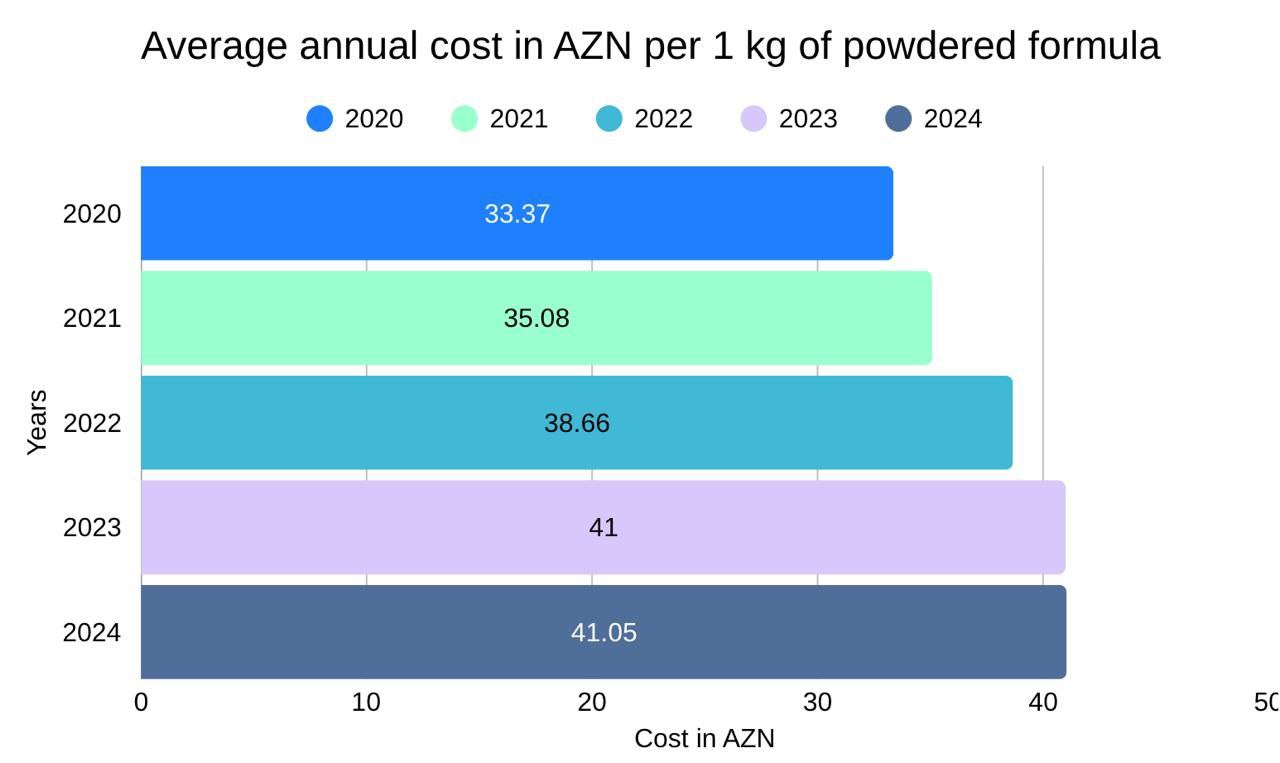
In Azerbaijan, due to the absence of local production of infant formula, prices are determined based on the brand of the formula as well as import and logistics costs. While the price per kilogram of powdered infant formula was 33.37 AZN in 2020, it reached 41.5 AZN in 2024. Over the past four years, the price of infant formula increased by 18.50%. This increase corresponds to the price growth observed in the infant food market in the United Kingdom. In the local market, the increase in the price of infant formula over the last four years corresponds to approximately 7.68 AZN per kilogram. This figure also aligns with the increase in the U.S. market for infant formula over the past four years, which is approximately USD 4.48 (7.06 AZN at the current exchange rate).
According to UNICEF calculations, each infant consumes an average of 3–3.5 kg of powdered infant formula per month during the first year of life. This refers to infants who are exclusively fed with formula only. Infants on mixed feeding may have lower consumption figures. As a result, an exclusively formula-fed infant may consume a total of 36–42 kg of powdered formula per year.
It should be noted that not all prepared formula is necessarily consumed by the infant in a single feeding, and portions are usually discarded for safety reasons. However, this factor does not reduce the expenses spent by parents. As a result, the cheapest infant formula brand requires an average annual expenditure of 909 AZN from the family budget. The most expensive formula brand requires an average of 9,152 AZN. It should be noted that these prices refer only to powdered formula.
Depending on quality and country of manufacture, the cost of a thermos for hot water ranges from 17 to 35 AZN, a sterilizer from 76 to 206 AZN, feeding bottles with teats from 19 to 42 AZN, and pacifiers from 8 to 15 AZN. In addition, pacifiers must be replaced at least every 2–3 months, and feeding bottles with teats at least four times a year to meet hygiene and safety requirements. On average, the annual expenditure for the equipment necessary for formula feeding may range from 217 to 499 AZN.
These figures do not include drinking water purchased for formula preparation, detergents for cleaning the equipment, or household expenses for electricity, heat, and water used in formula preparation. It should be noted that water must be heated to 70°C to prepare the formula.
In Azerbaijan, the average market price of powdered infant formula in 2024 is 41.05 AZN, which means that the estimated average annual turnover of formula distributors needed to supply infants who are fed with mixed or formula feeding during their first 12 months may reach 10,653,714 AZN.
It is important to note that the transition to formula feeding may be either a conscious choice by parents or a step necessitated by circumstances. However, it should also be emphasized that continuing breastfeeding and receiving professional lactation support represent a short- and long-term investment in the health of both mother and infant, lead to savings for the state and family budgets, and reflect an environmentally responsible approach.
Authors: Saltanat Zulfugarova and Hajar Piriyeva